
2026 Guide: After School STEM Programs in Singapore

What if your child's favorite playtime was actually the secret to mastering Primary One logic? It is a common worry for parents in Singapore. You see endless flyers for coding and robotics, yet you fear "fluff" programs that offer little more than expensive screen time. You want to know the difference between just playing with blocks and building a foundation in engineering or computational thinking. Finding the right after school STEM programs Singapore offers can feel overwhelming when you are balancing school readiness with the joy of discovery.
We understand that you want a clear progression from preschool curiosity to primary school success. With the Ministry of Education integrating AI literacy across all levels by 2026, the stakes for future-readiness have never been higher. This guide helps you cut through the confusion. You will discover how to choose the right enrichment by comparing curriculum depth, age-appropriate milestones, and hands-on learning techniques. We will explore how programs like Junior Engineer and STEMtastic transform screen time into real-world problem-solving. Let's turn that spark of wonder into a lifelong passion for logic and reasoning. It is time to build confidence, one discovery at a time.
Table of Contents
Beyond the Classroom: Why STEM Enrichment is Essential in Singapore 2026
Singapore's education system is evolving at lightning speed. By 2026, the Ministry of Education (MOE) has fully integrated AI literacy into the curriculum at every level. This shift isn't just about learning to use a computer. It's about "Future-Ready" skills that prepare our children for a world we can't yet imagine. While schools provide the essential theoretical foundation, quality after school STEM programs Singapore parents select today bridge the critical gap between knowing and doing. These programs transform abstract concepts into tangible results through hands-on application.
Early exposure is the secret to long-term success. Between the ages of 4 and 12, a child's brain is incredibly adaptable. This is the "golden window" for neuroplasticity. During these years, young learners develop the neural pathways for logic, spatial reasoning, and critical thinking. We don't want to rush them into a career. Instead, we want to spark a sense of wonder. By engaging with STEM early, kids learn to see the world as a series of puzzles waiting to be solved. This foundation aligns perfectly with MOE’s 21st Century Competencies, specifically focusing on critical, creative, and inventive thinking.
Aligning with Singapore’s Smart Nation Goals
Singapore remains a global leader in tech innovation. To keep pace, our children must move from being passive screen consumers to active creators and engineers. Computational thinking is the new foundational literacy. It's the ability to break down complex problems into small, manageable steps. Whether your child is building a physical structure or designing a digital sequence, they are practicing this vital skill. Early tech literacy ensures they aren't just using tools; they are understanding the mechanics behind them. This mindset is essential for a digital-first economy.
The Emotional Benefit: Building Confidence Through Discovery
Learning is most effective when it feels like an adventure. Before academic pressure ramps up in later primary years, enrichment offers a safe space to explore. We call this "productive failure." When a robot doesn't move or a tower falls, it's not a mistake; it's a data point. This iterative process builds a resilient "can-do" attitude. Success in these hands-on challenges ignites a child's confidence. It proves they have the tools to solve any problem. By acting as a supportive partner, we help them find the joy in the process of discovery.
Key Criteria for Comparing After-School STEM Providers
Picking a provider is about more than just finding a slot in the schedule. You want a partner in your child's growth. When comparing after school STEM programs Singapore offers, look for a journey, not just a workshop. A single session might be fun, but real logic takes time to bloom. It requires a curriculum with enough depth to challenge a curious mind without overwhelming it. You aren't just buying a class; you're investing in a developmental roadmap.
The best mentors don't just know code; they know kids. You need instructors who balance technical mastery with child psychology. They should ignite interest rather than just delivering a lecture. This creates an uplifting environment where wonder is the primary language. The tools matter too. A program that relies on a single plastic toy limits a child's vision. Look for tool diversity that explores mechanics, electronics, and structural design. This variety ensures the learning remains fresh and exciting.
Pedagogy vs. Play: What to Look For
Don't confuse entertainment with enrichment. While play is essential, it must be purposeful. High-quality Junior Engineer programs focus on "minds-on" learning. It's not enough to build a bridge; the child should understand why certain shapes support more weight. This reflection turns a simple activity into a lasting lesson. It builds a "can-do" attitude, turning curiosity into technical execution. A great program encourages kids to ask "why" and "how" at every step.
Assessing Program Progression
Your child's needs change as they grow. A four-year-old explores sensory cause-and-effect, while a ten-year-old tackles complex robotics. Ensure the provider offers a clear roadmap from Nursery to Primary 6. This progression should be cross-disciplinary, weaving together science and technology seamlessly. According to official data on STEM education, the government continues to emphasize these integrated skills to prepare students for the future. A reliable guide will show you exactly how each stage builds on the last. If you're looking for a place that values this methodical growth, exploring nurturing STEM enrichment can help you see the difference a structured path makes.
Comparing Cyberland’s Core Modules: Junior Engineer vs. Junior Programmer vs. STEMtastic
Every child is a unique spark. Some love the tactile feel of building towers. Others find joy in solving riddles and patterns. When you explore after school STEM programs Singapore parents trust, it's vital to match the curriculum to your child's natural inclinations. At Cyberland, we've carefully crafted our modules to nurture these distinct strengths. Whether they are tinkering with physical gears or debugging a digital sequence, we provide a supportive environment for every kind of learner.
Choosing the right starting point is the first step in a long-term journey of discovery. We don't believe in a one-size-fits-all approach. Instead, we offer specialized paths that grow with your child. This ensures they stay engaged and excited, building confidence as they master new skills. By focusing on their interests today, we prepare them for the technical challenges of tomorrow. Let's look closer at how these modules ignite different types of genius.
Junior Engineer: For the Builders and Tinkers
Junior Engineer is designed for the creators. It’s for the kids who want to see how the physical world fits together. We focus on mechanics, structural integrity, and spatial awareness. Your child won't just follow a manual; they'll learn why a certain gear ratio works or why a bridge stands firm. This hands-on creation builds essential fine motor skills and mechanical logic. For those looking to start this journey early, robotic classes for 6 year olds provide the perfect foundation for engineering success.
Junior Programmer: For the Logical Thinkers
Junior Programmer is the ultimate playground for the logical mind. We move beyond simple screen time into the world of foundational coding. Here, children learn the language of the future. Coding builds sequential logic and "if-then" reasoning. It’s about breaking a big problem into small, manageable steps. This mindset is a superpower in the modern world. We prepare children for a future where tech literacy is essential in every career path, from medicine to art. It’s about giving them the tools to be active creators in a digital economy.
For a more holistic experience, STEMtastic offers workshop-based challenges that blend these disciplines together. These multidisciplinary sessions mirror the goals of the Singapore Ministry of Education’s Applied Learning Programme (ALP). Your child will tackle real-world problems using a mix of science, technology, engineering, and math. This integrated approach ensures they see the big picture. Choosing the right after school STEM programs Singapore offers starts with understanding what makes your child's eyes light up. We are here to guide them through that transformation.
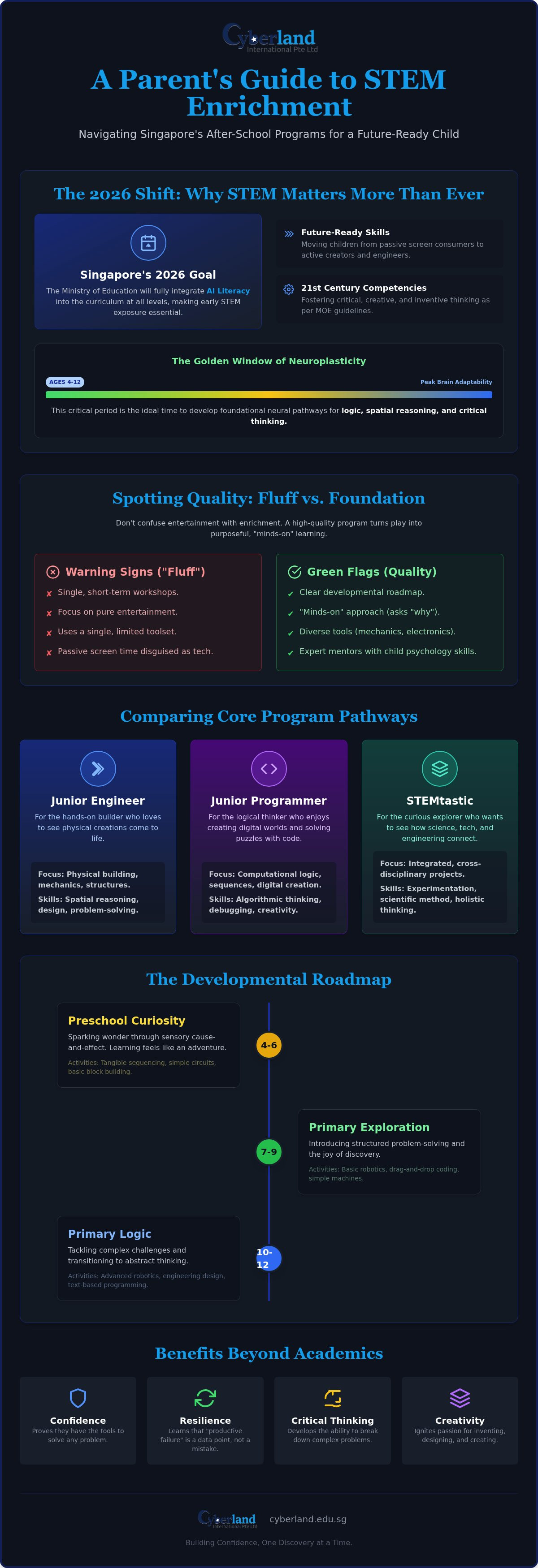
Age-Appropriate STEM: From Preschool Curiosity to Primary School Logic
Every child’s development is a unique journey. We don't expect a four-year-old to code complex algorithms. Instead, we nurture the natural curiosity they already possess. High-quality after school STEM programs Singapore parents choose must respect these developmental milestones. It starts with wonder. It ends with execution. By tailoring the challenges to a child's age, we ensure they stay confident and engaged. We move from sensory play to structured logic, building a foundation that lasts a lifetime.
The transition to Primary One is a major milestone for families. Many children struggle with the sudden shift from play-based learning to formal logic and reasoning. STEM enrichment acts as a vital bridge here. By introducing cause-and-effect early, we help kids develop the mental frameworks needed for primary school math and science. They learn to break down problems before they even step into a formal classroom. This proactive approach turns potential stress into a sense of mastery.
Preschool Enrichment: Building the Foundation
For our youngest learners, STEM is a sensory adventure. Our preschool enrichment in Ang Mo Kio focuses on sparking that initial "why." We use engineering blocks and simple assembly to develop fine motor skills. It’s about more than just building. It’s about fostering a "Growth Mindset" from age four. When a structure wobbles, we don't see a mistake. We see a chance to try a different path. This resilience is the greatest gift we can give a preschooler as they prepare for the years ahead.
Primary School Robotics: Mastering Complexity
As children move into Lower and Upper Primary, the challenges grow with them. We use robotics workshops for primary schools to teach the power of teamwork. Students apply mathematical concepts to real-life movements, seeing geometry and ratios in action. This isn't just about robots; it's about real-world problem-solving. We help students prepare for school-based competitions and build the portfolios needed for Direct School Admission (DSA) pathways. It’s a visionary way to turn a passion for tech into a clear academic advantage. Ready to see your child thrive? Explore our age-appropriate modules today and start their journey of discovery.
Why Cyberland Leads Singapore’s STEM Enrichment Landscape in 2026
Cyberland isn't just another name in a directory. We are a bold innovator in technical education. We combine this visionary energy with the heart of a friendly guide. Our center in Ang Mo Kio Industrial Park 2 serves as a hub of discovery. Here, we maintain strict quality control over every module. This ensures that the after school STEM programs Singapore parents choose for their children meet the highest standards. We've spent years building a curriculum designed specifically for the Singaporean child’s developmental milestones. We understand the local landscape. We know what it takes to succeed in 2026.
Our approach moves beyond simple theory. We focus on the joy of getting things right after a few tries. We celebrate the process of discovery. This is why we partner with preschools and primary schools nationwide. It is a mark of quality that educators trust. We don't just teach code or engineering. We ignite a positive trajectory for a child's development. Our goal is to make every child feel like a capable innovator. Finding the best after school STEM programs Singapore has to offer means looking for a provider that understands the MOE 21st Century Competencies.
Our Nurturing and Encouraging Environment
Learning should feel like a win. Our uplifting tone isn't just for marketing; it's the lifeblood of our classrooms. We keep class sizes small. This allows for personalized mentorship from STEM experts who actually understand child psychology. We don't just give answers. We ask the right questions. We create a warm, inviting atmosphere where every child feels safe to experiment. The Cyberland promise is simple. We spark a lifelong love for discovery by making complex concepts accessible and fun. It’s about building confidence that lasts far beyond the classroom walls.
Convenient and Trusted Partner
Schools across the island trust us to deliver high-quality STEM enrichment programs. They value our ability to bridge the gap between schoolwork and real-world application. Being located in the heart of Ang Mo Kio makes us a central hub for innovation. It’s an accessible space where visionary learning happens every day. We are committed to the success of the next generation. We are here to be your supportive partner in this exciting journey. Ready to take the next step? Partner with Cyberland to ignite your child’s potential today!
Ignite a Path to Future Success
Every spark of curiosity counts. Your child’s journey from preschool wonder to primary school success starts here. We’ve explored how the right enrichment bridges the gap between theory and hands-on application. By choosing a progressive roadmap instead of a one-off workshop, you ensure your child develops real-world logic and resilience. This is why selecting the best after school STEM programs Singapore offers is such a vital decision for your family’s future-readiness.
Cyberland remains a trusted partner for preschools and primary schools across the island. With dedicated modules like Junior Engineer and Junior Programmer, we provide the specialized guidance your child needs. Our expert mentors at our Ang Mo Kio hub are ready to turn complex technical concepts into joyful successes. Ignite Your Child’s Curiosity—Enroll in a Cyberland STEM Workshop Today! Let's celebrate the process of discovery together. The future is bright. Your child is ready to lead the way.
Frequently Asked Questions
Are after school STEM programs suitable for preschoolers as young as 4?
Absolutely. Our Nursery Enrichment and Kindergarten Enrichment modules are specifically designed for this age group. We focus on sensory discovery and basic cause-and-effect through tactile activities. At age 4, children have high neuroplasticity, making it the perfect time to spark curiosity. These after school STEM programs Singapore parents choose for their toddlers use physical kits and blocks to build fine motor skills without the need for complex screens.
How do these programs help with the transition to Primary One in Singapore?
They bridge the gap by shifting from pure play to structured reasoning. Many children find the Primary One math and science curriculum challenging because of the abstract logic required. Our programs introduce computational thinking and problem-solving in a fun environment. This builds the mental frameworks needed for formal schooling. By the time they enter P1, they already have a "can-do" attitude toward difficult tasks and logical puzzles.
What is the difference between the Junior Engineer and Junior Programmer modules?
Junior Engineer focuses on the physical world, while Junior Programmer dives into digital logic. In Junior Engineer, children explore mechanics and structural integrity by building physical models. They learn how gears and pulleys work. In contrast, Junior Programmer introduces sequential logic and block-based coding. Both paths build critical thinking. Choosing between them depends on whether your child prefers hands-on tinkering or solving digital riddles and patterns.
Do children need any prior experience in coding or robotics to join?
No prior experience is necessary for any of our modules. We welcome beginners and scaffold the learning to match each child's current level. Our expert mentors act as a reliable guide, ensuring that every student feels supported from day one. We focus on making complex concepts accessible. Whether your child is a first-time builder or a curious tinkerer, they will find a welcoming space to grow and learn.
How does Cyberland’s curriculum align with the MOE Science and Math syllabus?
Our curriculum is designed to complement the MOE Science and Math syllabus by focusing on Applied Learning. We emphasize the 21st Century Competencies, specifically critical and inventive thinking. While schools teach the theory, we provide the hands-on application. This helps students see the "why" behind mathematical ratios or scientific principles. It creates a deeper understanding that supports their academic performance in government primary schools across Singapore.
What is the typical class size for an after-school STEM workshop at Cyberland?
We maintain small class sizes to ensure personalized mentorship for every child. This allows our instructors to understand each student's unique developmental milestones. A nurturing environment is our priority. With fewer students per mentor, we can provide the uplifting support that helps kids overcome technical challenges. This organized yet playful setting ensures that no child is left behind while they explore the world of technology and engineering.
Where is Cyberland located and do they offer programs in schools?
Our main innovation hub is located at Ang Mo Kio Industrial Park 2. It serves as our center for quality control and expertise. Additionally, we partner with preschools and primary schools nationwide to deliver after school STEM programs Singapore families can access conveniently. This partnership model ensures that high-quality enrichment is available to students in their own familiar school environments, maintaining the same rigorous standards as our central hub.
Can STEM enrichment help with Direct School Admission (DSA) for secondary schools?
Yes, it is a powerful tool for building a strong DSA portfolio. By participating in specialized modules like STEMtastic, students develop documented proof of their technical skills and problem-solving abilities. They also learn the teamwork and resilience needed for school-based competitions. This forward-thinking preparation gives them a visionary edge when applying for secondary school pathways that value innovation and applied learning expertise. It turns their passion into a clear academic advantage.



Comments