
Top Logic and Reasoning Classes in Singapore: 2026 Guide

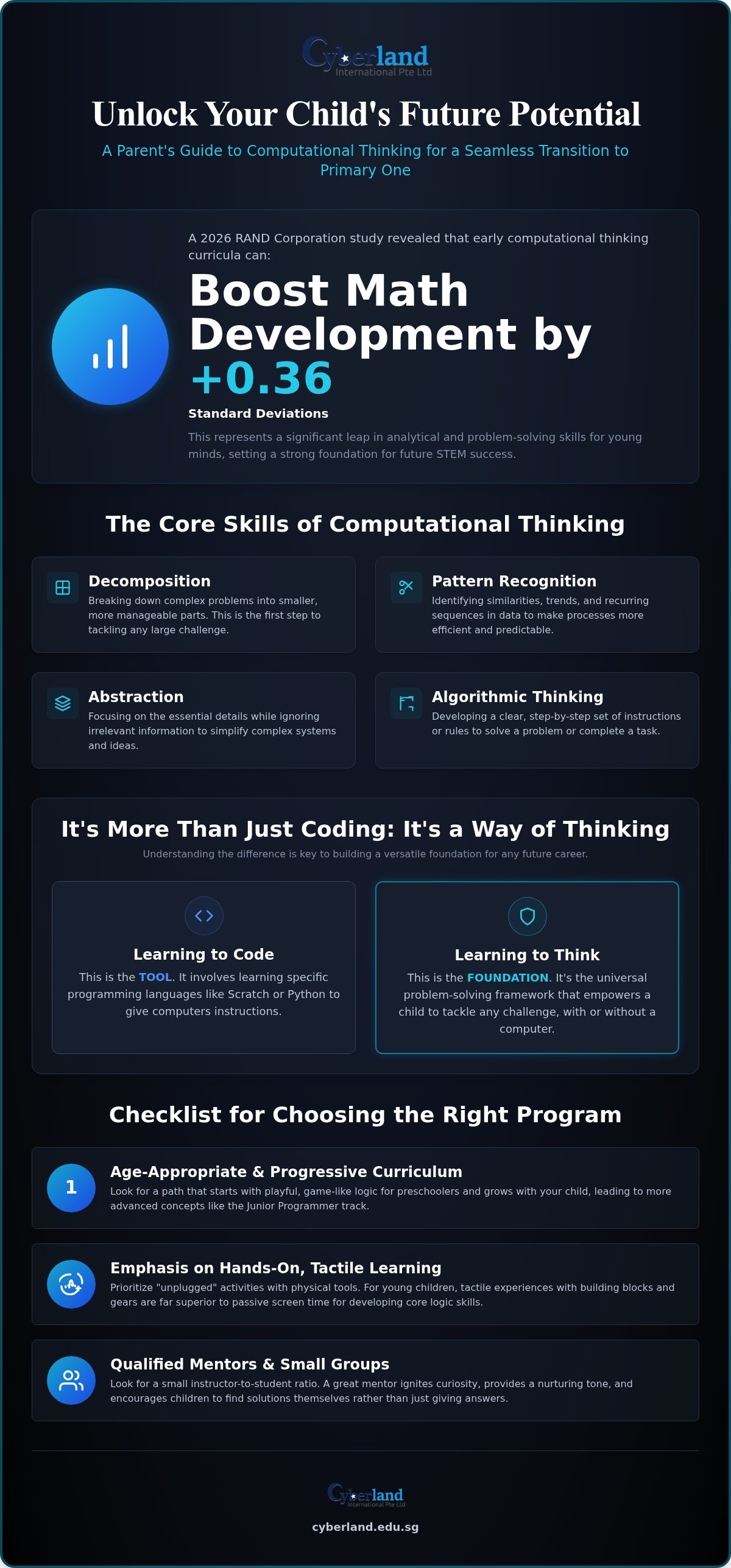
A 2026 study by the RAND Corporation revealed that early computational thinking curricula can boost a child's math development by 0.36 standard deviations. That is a significant leap for a young mind just beginning to explore. You likely feel the weight of the endless enrichment brochures piled on your kitchen counter. It is overwhelming. You want your child to thrive in a tech-driven world, but you worry if coding is just a passing trend or if they will fall behind before they even reach Primary One.
We understand that pressure. You want more than just a screen-time distraction; you want to ignite a lifelong curiosity. This guide helps you cut through the noise to find the best computational thinking for kids Singapore parents trust. We promise to show you how the right logic and reasoning classes can transform your child into a confident, engaged problem solver. We will explore hands-on programmes like Junior Programmer and STEMtastic workshops that bridge the gap between play and future-ready skills. Let's discover how to ensure a smooth transition into Primary One while keeping the joy of discovery alive.
Table of Contents
Why Logic and Reasoning Classes for Children are Essential in Singapore
Logic is the heartbeat of modern learning. It's not just about getting the right answer. It's about understanding the path. Many parents ask, "What is Computational Thinking?" At its core, it's a vibrant problem-solving process. Decomposition. Pattern recognition. Abstraction. These are the tools of the future. In a fast-paced city like ours, computational thinking for kids Singapore programmes provide the mental framework needed to thrive. We're moving beyond teaching children to be tech consumers who just swipe screens. We want them to be tech creators. Explorers. Thinkers. This ignition of interest starts with early reasoning.
The Logic Gap in Traditional Education
Standard school work sometimes misses the "how" behind problem-solving. While grades matter, the process matters more. This is the logic gap. Reasoning classes bridge this divide by prioritizing active discovery. Instead of rote memorisation, children engage in hands-on exploration. It makes abstract concepts feel tangible. Real. When a child learns to navigate a challenge through trial and error, they develop a growth mindset. They stop fearing mistakes. They start seeing them as valuable data points. This shift is vital for building long-term confidence in STEM subjects. It turns a "can't do" attitude into a "let's find out" perspective.
Preparing for Primary One and Beyond
The leap to Primary One is a big milestone. The Ministry of Education (MOE) emphasizes 21st-century competencies. Critical thinking. Inventive reasoning. Logical mastery builds the mental stamina required for complex math and science topics. By starting early, children develop a "logic muscle." New concepts feel familiar. They feel approachable. If you're curious about specific milestones, check out our guide on Preparing Preschoolers for Primary One Logic. Early exposure to computational thinking for kids Singapore ensures they enter the classroom ready to lead. It prepares them for a future where adaptability is the greatest skill of all. Every child is a bold innovator in training. They just need the right guide.
What to Look for in a Computational Thinking Programme
Choosing the right environment for your child is a big decision. It's about more than just finding a slot in a schedule. You want a space that nurtures wonder and builds confidence. In the vibrant landscape of computational thinking for kids Singapore, the best programmes prioritize age-appropriateness above all else. For a four-year-old, logic shouldn't feel like a lecture. It should feel like a game. Concepts like decomposition need to be simplified into "breaking big tasks into small steps." Look for a curriculum that grows with your child. It should move seamlessly from basic logical puzzles to applied programming as they mature. This progression ensures they don't hit a learning wall but instead feel a constant sense of achievement as they move toward more advanced tracks like our Junior Programmer course.
The Power of Hands-On Learning
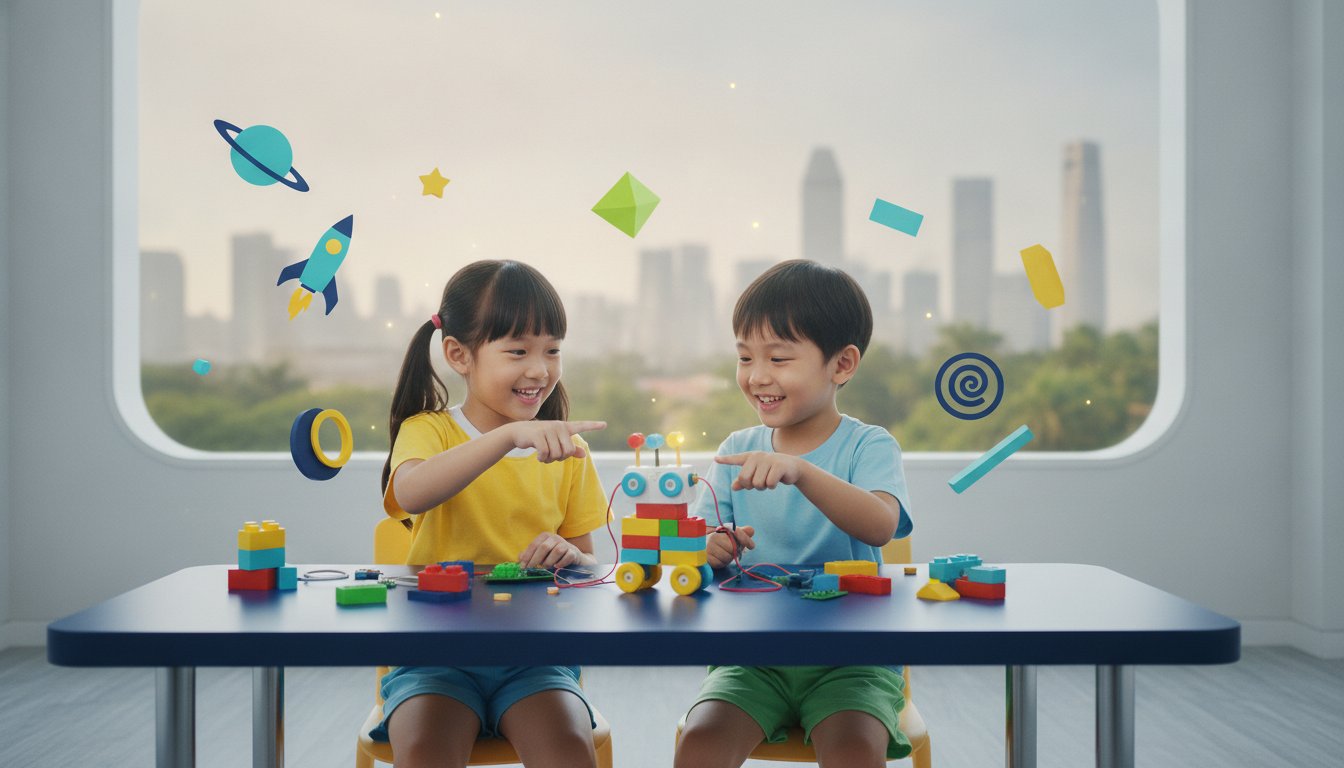
Tactile experiences are the foundation of early brain development. For preschoolers, physical building blocks are far superior to passive screen time. This is why our Junior Engineer workshops focus on the "unplugged" side of logic. Using physical tools provides immediate sensory feedback. When a gear doesn't turn, the child feels the resistance. They see the misalignment. This physical trial and error is a core part of the Code for Fun Programme initiatives seen across Singaporean schools. It builds a bridge from the concrete world to digital creation. If you want to see this in action, explore our hands-on enrichment workshops to see how we balance play with purpose.
Qualified Mentors vs. Passive Tutors
The person leading the class makes all the difference. You aren't just looking for a tutor to deliver a syllabus. You're looking for a mentor to ignite a spark. A small instructor-to-student ratio is vital here. In a cozy group, a teacher can spot the moment a child's eyes light up with a "Eureka!" moment. They can provide the nurturing, uplifting tone that builds confidence. During a trial class, watch how the instructor handles mistakes. Do they give the answer immediately? Or do they ask encouraging questions that lead the child to find the solution themselves? A great mentor acts as a guide, not a lecturer. They celebrate the process of discovery. This emotional support ensures that computational thinking for kids Singapore becomes a joyful journey rather than a chore. It transforms logic from a subject into a superpower. By choosing a programme that values engagement over rote repetition, you're setting your child on a positive trajectory for life.
Top Logic and Reasoning Classes for Kids in Singapore (2026 Edition)
The educational landscape in 2026 is more vibrant than ever. With the Ministry of Education expanding computing electives to more secondary students, the foundation for these skills must start early. Finding the right computational thinking for kids Singapore programme is about matching a child's curiosity with the right environment. You will find a variety of paths available today. Some focus on high-speed robotics. Others dive deep into software coding. However, the most effective programmes for early learners prioritize general logic and problem-solving mindsets over specific programming languages. This ensures your child remains an adaptable, lifelong learner.
Based in Ang Mo Kio Industrial Park 2, Cyberland has established itself as a reliable guide for families in the heartlands. We don't just deliver a syllabus; we ignite a spark. Our approach aligns beautifully with national initiatives like the Code for Fun programme, which aims to make logical mastery accessible to every student. We believe in building a supportive community where every child feels like a bold innovator.
Cyberland: The Nurturing Choice for Early Learners
We specialise in specialised modules for children aged 4 to 12. Our Junior Programmer and Junior Engineer paths are designed to create a warm, inclusive atmosphere. We understand that a child's first encounter with logic should be joyful. This is why we partner directly with local preschools and primary schools across Singapore. Our Nursery Enrichment and Kindergarten Enrichment sessions focus on hands-on discovery. We use physical tools to make abstract ideas feel real. There are no dense blocks of text here. Instead, we use short, action-oriented bursts of learning that keep energy levels high and minds engaged.
Specialised Coding and Robotics Academies
Singapore also hosts several "Competition-ready" centres. These are often geared toward older, advanced students aiming for Direct School Admission (DSA) or international robotics trophies. While these are excellent for high-achievers, it is important to choose a centre that aligns with your child's current stress levels and personality. A "Foundational-growth" path, like our STEMtastic workshops, is often better for building long-term confidence. It allows children to explore without the pressure of a looming scoreboard. When you evaluate a centre, look for mentors who prioritise the joy of discovery over just winning a trophy. A nurturing mentor can turn a difficult challenge into a visionary breakthrough for a young mind.
Understanding the Difference: Coding vs. Computational Thinking
Coding and logic are often confused. They shouldn't be. Coding is a tool; it's the language we use to speak to machines. In contrast, computational thinking is the engine. It's the logic that drives the machine. When families look for computational thinking for kids Singapore programmes, they often expect rows of laptops. However, true mastery begins before a single line of code is written. If a child understands how to break a complex problem into tiny, manageable pieces, they can learn any programming language with ease. The language might change as technology evolves, but the logic remains constant. It's the difference between learning to use a hammer and understanding the principles of architecture.
Consider a practical example. In our Junior Engineer sessions, students might use logic to build a sturdy physical bridge. They identify patterns in the structure. They abstract the most important support points. This is the same mental process used to code a robot to navigate a maze. Success in these high-level tasks starts with Critical Thinking for Early Learners. By focusing on the "why" before the "how," we prepare children for a future where they don't just follow instructions; they create the instructions.
The 'Unplugged' Logic Advantage
Neural pathways are built through engagement. Logic games and physical puzzles stimulate the brain in ways a screen cannot. This "unplugged" approach is a core part of our philosophy. It reduces screen-time anxiety for parents while still building future-ready skills. Children learn to sequence events and debug errors using tactile blocks. This physical feedback is essential for preschoolers. We integrate these physical workshops with digital modules to ensure a balanced development. It makes the transition to technology feel natural and exciting rather than overwhelming. Your child becomes a bold innovator by first mastering the world around them.
From Logic to Junior Programming
Once the logical foundation is firm, we move into our Junior Programmer course. This is where the magic happens. We use visual programming tools like Scratch and Blockly. These blocks act as a bridge. They remove the frustration of typing syntax while keeping the focus on logic flow. This approach has long-term benefits for the PSLE and beyond. The ability to decompose a word problem in mathematics or a hypothesis in science comes directly from this training. It builds the mental stamina required for academic success. Ready to see your child's curiosity turn into capability? Explore our logic-first workshops today and start their journey toward logical mastery.
Getting Started: The Journey to Logical Mastery with Cyberland
Every child is a natural scientist. They explore. They test. They learn. Identifying readiness for enrichment workshops doesn't require a complex exam. You just need to look for the spark. Common signs your child is ready for computational thinking for kids Singapore include:
A love for solving puzzles and riddles.
Constant questions about how machines or apps work.
Enjoyment in building complex structures with toys.
A natural curiosity for "what happens next" in a story or game.
At Cyberland, we believe in igniting wonder through hands-on discovery. We don't just teach logic; we mentor it. Based in Ang Mo Kio Industrial Park 2, our centre is a vibrant hub of creativity and reasoning. We strike a balance between professional authority and a warm, inviting atmosphere. Whether your child is just starting in Nursery Enrichment or moving through Kindergarten Enrichment, we have a path designed for their unique growth. We partner with local schools to ensure our STEMtastic workshops are accessible to everyone. We're here to guide your child's positive trajectory.
Exploring the Junior Engineer Path
Perfect for kids who love building and tinkering. This path focuses on physical problem-solving and spatial reasoning. These modules help children understand structural logic through tactile building. It's a foundational step for any young mind interested in how the physical world is built. If your child creates elaborate structures with blocks, they'll thrive here. Read more in our Junior Engineer Program Guide.
Exploring the Junior Programmer Path
Ideal for children curious about apps and technology. This path is for the digital creator. We focus on building a foundation in sequencing, loops, and conditional logic. We use visual tools to make these concepts approachable and fun. This ensures a smooth transition to more complex logic later in life. It's the perfect playground for a bold innovator. Check our Junior Programmer Course Guide for more info.
Ready to take the next step? Booking a session is easy. You can visit us at our main centre or find one of our many partner schools across Singapore. We're here to be a supportive partner in your child's development. Let's start this journey together and transform how your child thinks about the world.
Empower Your Child's Future with Logical Mastery
Your child's journey into the world of logic is a path filled with wonder. We've explored how computational thinking for kids Singapore centres can transform a simple curiosity into a powerful problem-solving toolkit. Remember that coding is just the language; the real magic lies in the reasoning behind it. By choosing hands-on, tactile experiences, you provide a solid foundation for Primary One and beyond. Whether they are building physical structures or designing their first digital game, the goal is the same. Growth. Confidence. Joy.
As a trusted partner of Singapore schools, Cyberland is here to be your reliable guide. Our expert mentors specialize in nurturing children aged 4 to 12 through our hands-on Junior Engineer and Junior Programmer modules. We believe every child is a bold innovator waiting for the right spark. Don't let the overwhelming number of options hold you back. Focus on the joy of discovery. Ignite your child's curiosity with Cyberland's enrichment programmes today! Together, we can prepare your little one for a visionary future. The next great breakthrough starts with a single logical step.
Frequently Asked Questions
At what age should a child start logic and reasoning classes in Singapore?
Ideally, children can start as early as age 4. At this stage, their brains are highly plastic and ready to absorb foundational patterns. Our Nursery Enrichment and Kindergarten Enrichment programmes are specifically designed for this age group. Starting early helps build the logic muscle before academic pressures increase. It's about fostering a natural curiosity through play rather than formal testing. This early start ensures a positive trajectory for their future development.
Is computational thinking the same as coding?
No, it's the mental foundation that makes coding possible. While coding is the act of writing instructions for a computer, computational thinking is the problem-solving process. It involves decomposition, pattern recognition, and abstraction. In the context of computational thinking for kids Singapore, we focus on teaching children how to think through a problem logically before they ever touch a keyboard. This skill is useful in every subject. It's about building a versatile mindset for a tech-driven world.
How do logic classes help with Primary One preparation?
They bridge the gap between preschool play and the rigorous Primary One curriculum. Logic classes build mental stamina and the ability to follow complex, multi-step instructions. This is essential for the MOE's focus on 21st-century competencies. By mastering basic reasoning early, children feel more confident when they encounter new mathematical concepts or scientific inquiries in a formal classroom setting. It turns potential anxiety into a sense of discovery and ready-to-learn confidence.
My child isn't interested in computers; are these classes still useful?
Absolutely, because the core skills are universal. Our Junior Engineer workshops, for example, focus on physical building and structural logic without a screen. These activities develop spatial reasoning and fine motor skills. Logic is a life skill that helps with everything from organizing a school bag to understanding a science experiment. We ignite interest through hands-on play. This ensures every child finds a way to connect with the material and feels like a bold innovator.
What is the typical class size for Cyberland workshops?
We maintain small, cozy groups to ensure every child receives personalized attention. A nurturing environment is essential for early learners who may feel shy or overwhelmed in large settings. Our expert mentors can spot a "Eureka!" moment and provide immediate, encouraging feedback. This low instructor-to-student ratio allows us to tailor the pace to each individual's developmental milestones. It makes the learning experience feel like a supportive partnership rather than a detached service.
Do these programmes follow the MOE STEM curriculum?
Yes, our modules are designed to align with and support the Ministry of Education's STEM initiatives. We focus on the same core competencies, such as critical thinking and inventive reasoning, that are prioritized in Singaporean schools. By partnering directly with local preschools and primary schools, we ensure our content is relevant and helpful. Our STEMtastic workshops provide a perfect supplement to what children are already learning in their daily classrooms, reinforcing their academic growth.
How can I foster logical thinking at home?
You can encourage logic through simple, everyday activities. Ask your child to help you follow a recipe or organize their toys by specific categories. Play board games that require strategy or work together on jigsaw puzzles. These unplugged moments are excellent for building neural pathways. Encouraging them to explain why they made a certain choice helps reinforce their reasoning skills in a low-pressure, loving environment. It makes the joy of discovery a family experience.
What makes Cyberland different from other coding schools in Singapore?
We are nurturing mentors rather than just passive tutors. While many schools focus on high-competition results, we prioritize foundational growth and the joy of discovery for ages 4 to 12. Our unique blend of physical Junior Engineer modules and digital Junior Programmer tracks ensures balanced development. Based in Ang Mo Kio, we're a community-focused partner that understands the specific needs of Singaporean families. We focus on the individual's well-being and long-term success through computational thinking for kids Singapore.
Comments